
Filtration
With filter media formulation, pleat design, pressure-loss control and functional validation, KENMOS supports cabin filters with balanced airflow, filtration efficiency and stable quality.

With filter media formulation, pleat design, pressure-loss control and functional validation, KENMOS supports cabin filters with balanced airflow, filtration efficiency and stable quality.

Filters made with different material compositions produce different pressure drops. Through automotive filter testing equipment based on DIN 71460, we can determine optimal pleat conditions to increase airflow, reduce blower speed, extend blower life and lower fuel consumption.
Negative-ion functional filters can increase the negative-ion content in cabin air and help improve in-vehicle air quality.
Cabin filters need to handle common in-vehicle air pollutants such as PM2.5, dust mites, pollen, mold, VOCs and formaldehyde. Through different filter media designs, filtration, adsorption and inhibition performance can be improved to keep cabin air fresh.
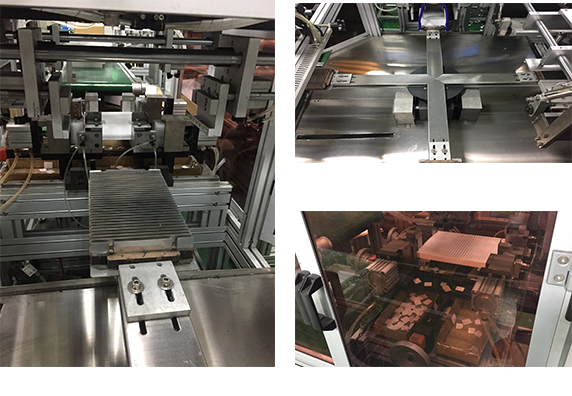
Automated filter production improves capacity and reduces human-error risk, effectively raising yield to 99.7%.
DIN 71460 is a German/European standard for automotive filters. Using DIN 71460 testing methods, the laboratory can evaluate filter composition, pressure drop, dust collection (PM2.5) and adsorption performance for substances such as toluene and formaldehyde.
Particle counters used with DIN 71460 can comprehensively analyze airborne particle composition across different particle sizes and evaluate filtration performance.
Gas chromatography applied with DIN 71460 provides specific analysis of gas composition and supports effective evaluation of filter adsorption performance.